Valley County Dog Registration Information
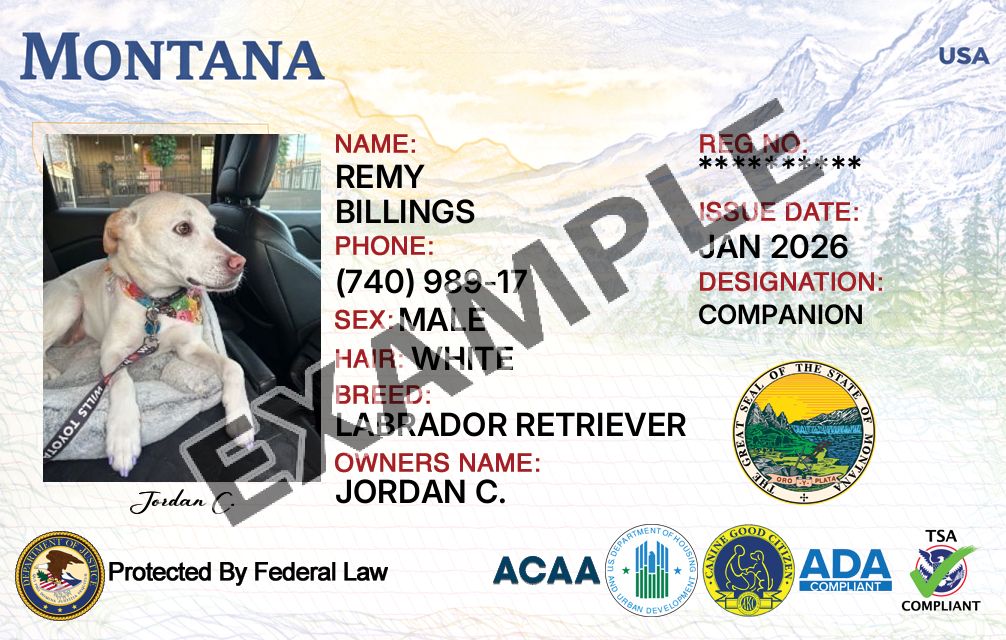
Service Dogs and Emotional Support Animals in Valley, Montana
If you’re searching for where do I register my dog in Valley County, Montana—especially for a service dog or emotional support dog—the key point is that “registration” usually means a local dog license (when required by a city or town), plus keeping vaccinations current. There is no single universal federal registry that you must use for service dogs or emotional support animals. Instead, dog licensing requirements in Valley County, Montana can depend on whether you live inside a municipality (such as the City of Glasgow) or in an unincorporated area of the county.
- Dog licensing is a local requirement set by a city/town (and sometimes a county), typically tied to rabies vaccination proof.
- Service dogs are defined by what the dog is trained to do for a person with a disability—not by a registry card.
- Emotional support animals (ESAs) are generally recognized in limited housing contexts and are not the same as service dogs.
Where to Register or License Your Dog in Valley County, Montana
The offices below are the most relevant official contacts found for dog licensing / local animal services serving residents in Valley County, Montana. Because licensing rules can differ by municipality, start with the city office that matches your address (for example, City of Glasgow for addresses inside city limits). If you are outside city limits, contact the Valley County Sheriff’s Office to confirm whether any county-level licensing applies where you live and who handles animal-related enforcement in your area.
Valley County Clerk & Recorder / Superintendent of Schools
Glasgow, MT 59230
Valley County Sheriff’s Office
Glasgow, MT 59230
City of Glasgow (City Offices)
Glasgow, MT 59230
Glasgow Police Department
Glasgow, MT 59230
Town of Nashua — Animal Services
- Responding to stray animal complaints
- Investigating dangerous animals
- Impoundments and ordinance enforcement
- Barking dog complaints
Overview of Dog Licensing in Valley County, Montana
How dog licensing typically works
A dog license in Valley County, Montana (when required) is usually issued by a local government (commonly a city/town). Licensing often serves as an official record that connects a dog to an owner and shows that the dog meets basic public-health requirements (especially rabies vaccination). The license may come with a tag that is meant to be attached to the dog’s collar.
City vs. unincorporated Valley County rules
In many Montana counties, pet-related rules can differ depending on whether you live:
- Inside a city or town boundary (for example, Glasgow or Nashua), where local ordinances may require licensing.
- Outside city limits (unincorporated Valley County), where there may be fewer municipal rules, and animal-related issues may be handled differently (often through county law enforcement or designated local processes).
Because of this, the most accurate answer to “where to register a dog in Valley County, Montana” starts with confirming your address jurisdiction and then contacting the corresponding official office.
What You Need Before Registering a Dog
Common documents and details
While requirements can vary by municipality, many local licensing offices ask for:
- Proof of current rabies vaccination (certificate or documentation from a veterinarian)
- Owner identification (such as a driver’s license or other ID)
- Proof of residency (especially if licensing is tied to a city/town address)
- Spay/neuter documentation (if your local fee structure varies based on altered status)
- Basic dog details (name, breed/type, color/markings, sex, approximate age)
Rabies vaccination note
Rabies vaccination is commonly connected to licensing and may also affect how incidents (like bites) are handled. Keep your rabies certificate in a safe place and be prepared to show it when requested by a licensing office or responding authority.
Steps to Register or License a Dog in Valley County, Montana
Step 1: Confirm your jurisdiction (city/town vs. county area)
- If your home address is inside the City of Glasgow, start with the City of Glasgow for licensing rules and renewal timing.
- If you live in another municipality (such as Nashua), check with that town’s offices about dog licensing requirements.
- If you live outside city limits, contact the Valley County Sheriff’s Office to confirm what rules apply where you live and who manages animal services for your area.
Step 2: Gather vaccination and owner documentation
Have your rabies certificate and basic owner/dog information ready. If you recently moved, it can help to bring a document that shows your physical address.
Step 3: Apply and pay any required fee
If your municipality requires a license, you may be asked to complete a form and pay a licensing fee. If a tag is issued, attach it to your dog’s collar as instructed by the local office.
Step 4: Keep records and renew on time
Keep a copy of your license information and vaccination records. Many places license annually, but renewal cycles can vary, so confirm with the local office.
Service Dog Laws in Valley County, Montana
Service dog status (what matters legally)
A service dog is generally a dog that is individually trained to do work or perform tasks for a person with a disability. The legal status of a service dog is based on the dog’s training and the handler’s disability-related need—not on buying a certificate or finding a “service dog registry.”
Do service dogs still need a local dog license?
Local rules can vary, but in many places a service dog is still expected to comply with generally applicable public health requirements (such as rabies vaccination) and any local licensing rules that apply to all dogs. If you are trying to figure out animal control dog license Valley County, Montana rules for a service dog, the safest approach is to ask the city/town licensing office for your address (or the Valley County Sheriff’s Office if you are outside city limits) whether a standard dog license is required even when the dog is a service animal.
Service dog vs. dog license vs. ESA (quick comparison)
| Category | What it is | How it’s “documented” | Typical local requirement |
|---|---|---|---|
| Dog license | Local registration/record for a dog (often required by a city/town) | License record + tag issued by the local authority | May require proof of rabies vaccination and payment of a fee |
| Service dog | Individually trained to perform disability-related tasks | No single universal federal registry; status comes from training and use for disability tasks | May still need to follow local licensing and vaccination rules that apply to all dogs |
| Emotional support animal (ESA) | Provides comfort/support that helps a person; not task-trained as a service dog | Generally supported by a healthcare provider’s documentation for certain housing situations | Not a substitute for a dog license; city/town licensing rules may still apply |
Emotional Support Animal Rules in Valley County, Montana
What an emotional support animal is (and is not)
An emotional support animal (ESA) is not the same as a service dog. ESAs are generally associated with certain housing-related accommodations when proper documentation exists, but they do not automatically have the same public access status as service dogs.
Does an ESA need to be “registered” locally?
If your city or town requires dog licensing, an ESA is typically treated like any other dog for licensing purposes. In other words, an ESA designation does not usually replace a local requirement to obtain a dog license in Valley County, Montana (where applicable). For the most accurate answer, contact the office for your jurisdiction in the section above and ask what the dog licensing requirements are for your address.
Frequently Asked Questions
Where do I register my dog in Valley County, Montana?
Start by determining whether your address is inside a city/town (like Glasgow or Nashua) or outside city limits. If you are inside a municipality, the city/town office typically handles licensing requirements. If you are outside city limits, contact the Valley County Sheriff’s Office to confirm which rules and agencies apply and who handles animal services for your area.
Is there one official federal registry for service dogs or emotional support dogs?
No. Service dog legal status is based on disability-related task training, not on a universal federal registry. Emotional support animals are also not established through a universal federal registration system. If you need a local dog license, that comes from your local government authority (city/town, and sometimes county).
Do I need proof of rabies vaccination to get a license?
Many local licensing systems require proof of current rabies vaccination. Requirements can vary by municipality, so confirm with the office for your address jurisdiction.
If I live outside Glasgow city limits, does Glasgow’s dog license rule apply to me?
City ordinances typically apply inside city limits. If you live outside the City of Glasgow, contact the Valley County Sheriff’s Office (or your nearest town office if you live in another municipality) to confirm what rules apply where you live.
What You May Need
Related local search terms
- where to register a dog in Valley County, Montana
- dog license in Valley County, Montana
- animal control dog license Valley County, Montana
- dog licensing requirements Valley County, Montana
- service dog vs emotional support animal Valley County, Montana
Register A Dog In Other Montana Counties
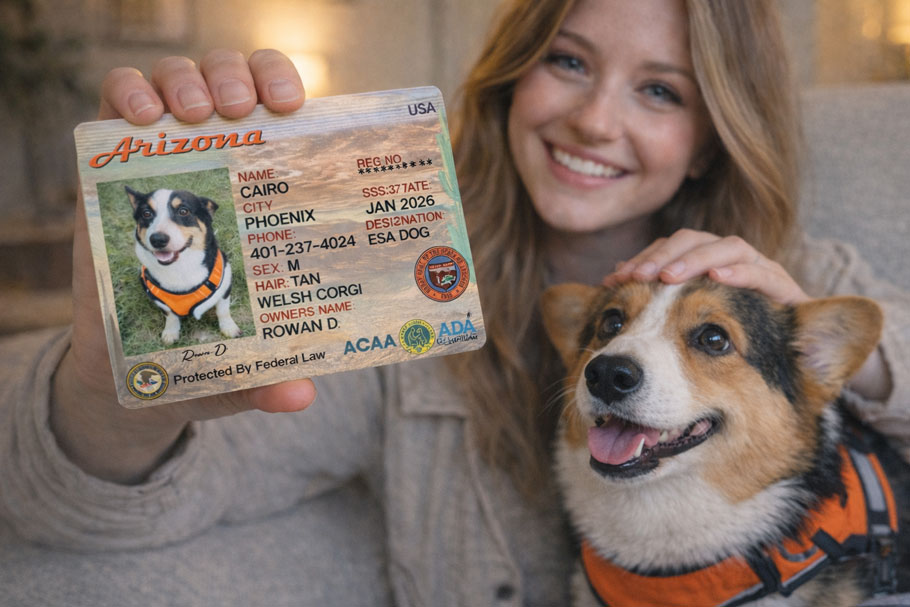
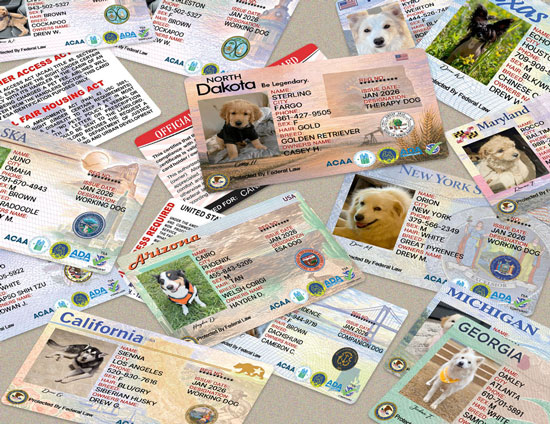
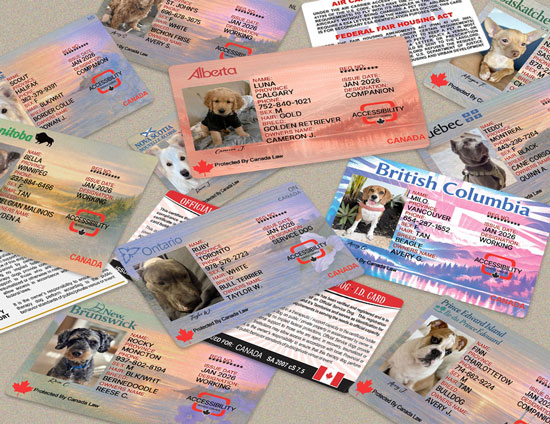
Select your county below to get started with your dog’s ID card. Requirements and license designs may vary by county, so choose your location to see the correct options and complete your pup’s registration.
- Beaverhead County Dog Registration
- Big Horn County Dog Registration
- Blaine County Dog Registration
- Broadwater County Dog Registration
- Carbon County Dog Registration
- Carter County Dog Registration
- Cascade County Dog Registration
- Chouteau County Dog Registration
- City of Anaconda County Dog Registration
- City of Butte County Dog Registration
- Custer County Dog Registration
- Daniels County Dog Registration
- Dawson County Dog Registration
- Deer Lodge County Dog Registration
- Fallon County Dog Registration
- Fergus County Dog Registration
- Flathead County Dog Registration
- Gallatin County Dog Registration
- Garfield County Dog Registration
- Glacier County Dog Registration
- Golden Valley County Dog Registration
- Granite County Dog Registration
- Hill County Dog Registration
- Jefferson County Dog Registration
- Judith Basin County Dog Registration
- Lake County Dog Registration
- Lewis and Clark County Dog Registration
- Liberty County Dog Registration
- Lincoln County Dog Registration
- Madison County Dog Registration
- McCone County Dog Registration
- Meagher County Dog Registration
- Mineral County Dog Registration
- Missoula County Dog Registration
- Musselshell County Dog Registration
- Park County Dog Registration
- Petroleum County Dog Registration
- Phillips County Dog Registration
- Pondera County Dog Registration
- Powder River County Dog Registration
- Powell County Dog Registration
- Prairie County Dog Registration
- Ravali County Dog Registration
- Richland County Dog Registration
- Roosevelt County Dog Registration
- Rosebud County Dog Registration
- Sanders County Dog Registration
- Sheridan County Dog Registration
- Silver Bow County Dog Registration
- Stillwater County Dog Registration
- Sweet Grass County Dog Registration
- Teton County Dog Registration
- Toole County Dog Registration
- Treasure County Dog Registration
- Wheatland County Dog Registration
- Wibaux County Dog Registration
- Yellowstone County Dog Registration